


Tanker Truck
What is Tanker Truck?
Tanker Truck is a motor vehicle designed to carry liquids or gases on roads. The largest such vehicles are similar to railroad tank cars, which are also designed to carry liquid loads. Many variants exist due to the wide variety of liquids that can be transported. Tank trucks tend to be large; they may be insulated or non-insulated; pressurized or non-pressurized; and designed for single or multiple loads (often by means of internal divisions in their tank).
Benefits of Tanker Truck
Efficient transportation
Tanker trucks provide a highly efficient means of transporting large quantities of liquids, gases, and other bulk materials. Their specialized design allows maximum payload capacity, reducing the number of trips required and minimizing transportation costs.
Versatility
Tanker trucks come in various sizes and configurations, catering to different industries' needs. They can transport many substances, including petroleum products, chemicals, food-grade liquids, water, etc. This versatility makes them indispensable across multiple sectors.
Safety and security
Tanker trucks are built with safety in mind. They are equipped with advanced features such as reinforced tanks, anti-spill mechanisms, and pressure relief valves to ensure the secure transportation of hazardous materials. Additionally, their sealed compartments prevent contamination and maintain product integrity during transit.
Time-Saving
Tanker trucks offer significant time-saving benefits compared to other modes of transportation. Their high-capacity tanks can transport large volumes in a single trip, reducing loading and unloading times. This efficiency helps businesses streamline their operations and meet tight deadlines.
-
 6*4 Sprinkler Tanker TruckHOWO76 Standard cab,(one bed) all-steel forward control,55ºhydraulically tiltable to the front,2-Add to Inquiry
 -
 Water Tanker TruckSINOTRUK HOWO WATER TANKER TRUCK 10M3 The Howo Water Tank is designed to transport and distributeAdd to Inquiry
 -
 HOWO Tank TruckHOWO76 Standard cab,(one bed) all-steel forward control,55ºhydraulically tiltable to the front,2-Add to Inquiry
 -
 HOWO 6x4 Oil Tank TruckModel No. : ZZ1257M4647CHorsepower: 266 - 371 HPTransmission: 10F & 2RTank Body: 20 CBMAdd to Inquiry
 -

-

-
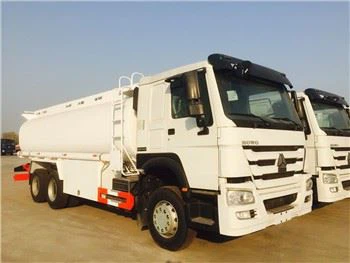 Patrol Tank TruckPatrol tank truck HOWO 20CBM fuel tanker with 5 compartment SpecificationAdd to Inquiry
 -
 Oil Tanker Truckoil tanker truck HOWO 6x4 16CBM Oil Tanker Truck Brand: SINOTRUK HOWO Model: ZZ1107G4215C1 OurAdd to Inquiry
 -
 Tank Trucktank truck HOWO 4x2 10CBM Oil Fuel Refueling Tanker Truck Product specification Product PictureAdd to Inquiry
 -
 Howo Tanker Truckhowo tanker truck HOWO 4x2 10CBM Oil Fuel Refueling Tanker Truck Product specification PictureAdd to Inquiry
 -
 4x2 water sprayer truck10CBM oil tanker with pump,fuel pump nozzle,Filling machine(PTO,front Exhaust pipe)Add to Inquiry


- Tel: +8616678784677
- Email: export@sinotruks.net.cn
- Add: No.17670, Panwang Road, Zhangqiu District, Jinan City, Shandong Province, China.
Why Choose Us?
SINOTRUK technology development center, among China's first group of national corporate technical center, has a testing laboratory, which is accredited by Chinese National Accreditation Board, is qualified to develop and test vehicle, engine, parts material processes, owns sophisticated processing and testing equipment, and has been up to advanced world standards in terms of equipment such as engine, vehicle, parts vibration and strength test equipment.
2009, upon approval by the State, the National Heavy-duty Truck Engineering Research Center was inaugurated in SINOTRUK, which undertakes functions such as technical R & D, application demonstration, achievement popularization and technical service in China's heavy-duty truck industry. In 2009, with approval by the state, the National Heavy Duty Automobile Engineering Research Center was inaugurated in SINOTRUK, it undertakes functions such as technology R&D, application demonstration, achievement generalization, technical service of China Heavy Duty Truck industry.
We primarily organize the development, manufacturing and sale of trucks, special trucks, buses, special vehicles, engines and engine units, auto parts and special chassis. We have vehicle enterprises, engine enterprises, axle enterprise, as well as transmission enterprises.
With overwhelming superiorities in technology and market in heavy duty truck industry, SINOTRUK has achieved remarkable sales both domestic and abroad, our products have been exported to more than 90 countries world wide, thus being accredited as a national vehicle export base by the National Development and Reform Commission and the Ministry of Commerce.
Ypes of Tanker Trucks
Light Duty Tankers
Light duty tankers have a volume of up to 1,000 gallons and a gross weight carrying capacity less than 12,000 pounds.
Medium Duty Tankers
Gas, fuel, and water transportation is often carried out in medium duty tankers. How many gallons are in this tanker truck? Medium duty tankers can hold between 500 gallons and 4,000 gallons, with a gross weight capacity less than 26,000 pounds.
Heavy Duty Tankers
Heavy duty tankers are the final type of tanker truck we' ll discuss. Their volume capacity typically ranges from about 5,500 gallons to 9,000, and they can transport more than 26,000 pounds of waste. To accommodate this load capacity, heavy duty tanker trucks are up to 53 feet for single trailers and up to 100 feet for multi-trailer configurations.
Features of Tanker Truck
-
Some have two or three compartments so more than one type of oil can be transported at a time or less than a full truckload of oil can be transported. However, they are hard to find.
-
Some are insulated to protect the higher melting stocks from solidifying in the transit.
-
Some have heated jackets to maintain higher temperature during extreme cold weather. This is not always safe because the temperature control is not always good.
-
Some have two heating coils inside that can be used to melt the solidified product upon arrival by using low-pressure steam and thermodynamic traps.
-
The following steps are recommended for physically loading the truck with deodorized oil after the loading truck has been found satisfactory.

Tank Trucks Bottom Loading Key Advantages
Fire prevention
The process of top loading involves the splashing of fluids during loading. This causes a significant build-up of electrical charges within the compartment itself. Electrical discharges can occur for many reasons. The opportunities for generating a spark are increased by the presence of moving men and equipment on the top of the truck. Eliminating this reduces the risk. Grounding systems associated with the overfill prevention system reduce the opportunity for sparks even further.
Spill prevention
Every petrochemical product spill is potentially serious from the aspects of fire safety, pollution control and loss of valuable product. The dry disconnect features associated with the API bottom loading standards reduce or eliminate the potential for product spills at both loading terminal and the service station. Also the overfill protection system as specified by the API prevents the possibility of serious product spill at the terminal.
Operator safety
Loading a tank truck from the top requires that a person work on a narrow walkway on the top of the truck high above the pavement. The operator has to handle awkward equipment and takes different positions to perform his task. At the same time, the operator may be outside in poor weather conditions and he may well be breathing high levels of chemical/petrochemical/petroleum vapors, which may affect his performance. The same operator is responsible to react quickly in case of an emergency. Loading a tank truck from the bottom, the operator is standing safely on the ground throughout the loading process. During the actual loading, the operator is normally standing at the control ready to react quickly in case if an incident.

If you’re interested in becoming a tanker driver, know that tankers are frequently used to transport flammable liquids such as gasoline, pesticides and cleaning solutions.
Besides the CDL license, safety is heightened with these vehicles. Hence, you’ll need extra training as regulated by the Occupational Safety and Health Administration (OSHA) in order to handle hazardous materials.
There is definitely more responsibility on the road when you are part of this specialized niche, but with that added responsibility comes benefits of higher pay than with other trucking niches.
If your career is in trucking, it doesn’t hurt to go the extra mile with training and experience in order to get the best salary possible in a less focused on niche by driving a tanker.
Tanker Truck-A Vital Component Of Transport Industry

A tanker truck is a specially designed-vehicle for transporting liquids, gases, and hazardous materials. They consist of a large cylindrical tank mounted on a truck chassis made from durable materials like steel or aluminum, ensuring the safe transportation of various commodities.
Typically, these trucks have pumps, hoses, and meters to facilitate loading and unloading operations. Tankers are essential in ensuring the smooth and efficient distribution of liquids or gases across different industries. They provide a cost-effective and reliable means of transporting large quantities of substances, minimizing the need for multiple trips or alternative transportation methods.
Tanker truck design is crucial to prevent leaks, spills, and accidents during transport. They have cutting-edge safety features like compartments and baffles that help stabilize the load and reduce movement. By doing this, it is made sure that the liquids or gases being transported are kept safe during the entire trip.
Tanker Truck Safety Hazards-Preventing Injuries

Wear Your PPE
When you' re working around your tanker, it' s crucial that you use the right Personal Protective Equipment (PPE). This equipment is available for you to keep you safe from potentially dangerous situations.

Know Your Limits
You should always be aware of your limits when working at heights or climbing ladders, and take care not to push yourself too far. If you are feeling lightheaded or dizzy, it is important to take a break and get some fresh air. Don' t rush yourself through a task, as this can put you at risk of injury. Pace yourself and use caution when working around a tanker truck.

The Three Points of Contact
Drivers live and breathe by this rule. The three point contact rule is in place for working at heights because it provides stability and helps prevent slips and falls. When you’re on a ladder, make sure you always keep three points of contact, regardless of its height. Follow all safety precautions and use proper equipment whenever possible to ensure your own safety and that of those around you.
Tanker trucks are vehicles with large tanks for transporting liquids. They are designed for specific cargos and service requirements and are built in a range of sizes. Tanker trucks are equipped with a pumping system for loading and off-loading liquids. The capacity is usually controlled by the 80,000 lb gross weight limit for trucks in the US. Small tanker trucks have a maximum capacity of 3,000 gallons, while large tankers have a maximum capacity of 11,600 gallons. However, the maximum capacity of a tanker truck depends on the density of the liquid being transported, Tanker trucks are categorized by volume capacity and size.
Transporting Various Liquids
The smaller-capacity tanker trucks transport liquid cargo throughout a local community. These types of trucks are typically used at airports to fuel aircraft. Small tankers also deliver domestic fuels, such as liquefied petroleum gas, to homes. This type of tanker normally carries less than 1,000 gallons. Large tankers transport more than 11,000 gallons and carry various liquids, including hazardous materials.
Many tanker trucks are capable of transporting various liquids simultaneously. These tankers use several compartments and are capable of transporting a variety of liquids, including industrial chemicals, concrete, diesel, milk, gasoline and water. Each individual liquid has a different density, which alters the tanker's maximum carrying capacity.
Use of Baffles
Although tanker trucks vary in size, the tankers all have the same distinct shape that provides maximal storage capacity. The compartments aid in stabilizing the truck and offer increased transport efficiency.
Gas Station
A gas station's fuel storage tank ranges from around 12,000 gallons to 24,000 gallons of each 87 and 91 octane per station, not per pump. You might find some 10,000 and less but they are being phased out.
What do Tanker Trucks Carry?
Tanker trucks carry liquids and sometimes dry goods. Generally, these trucks carry liquids, but they can also carry solid substances such as grain or fertilizer that can be poured into a contained trailer.
Typically though, tanker trucks are responsible for hauling oil, chemicals, and even beverages like milk or water across the country.
These trucks come in a variety of shapes and sizes, each designed to carry different substances safely. Many gases, for example, can be liquified when cooled, so these are transported using a cryogenic trailer, while gases that are liquified under high amounts of pressure are transported in pressurized tankers.
Some tankers can even carry tubes of non-liquefied gas if neither of these methods works to liquefy it.
Because of the way liquids behave when they're moving and because many tanker trucks are hauling hazardous materials, tanker drivers have to have special certifications in addition to their CDLs.
Tanker Truck Create Driver-Friendly Facilities
tanker-truck-facilityThe cold reality of today's bulk freight market is that, if freight is available from multiple companies in your area, carriers will choose the locations that provide rapid turnaround, are clean and safe, and treat drivers with respect.
Do an honest assessment of your own operation from a driver's point of view: Is your location driver-friendly? Here's a partial checklist to help answer the driver-friendly question:
Check-in windows are manned at all times
Clear signage or instructions on where to load/unload
Safe environment for driving, clear of barrels and debris, with load/unload locations that are easy to reach
Clean bathroom facilities and break rooms
Weigh scales on site or at a convenient off-site location
Attitude of respect and helpfulness toward visiting drivers
Drivers know the locations that appreciate and respect the work they do – and those that do not. They are quick to share their assessment – directly or through social channels – with their employers and other drivers. By investing the time to become a driver-friendly plant, you can get on the right side of this discussion.
Our Factory
SINOTRUK technology development center, among China's first group of national corporate technical center, has a testing laboratory, which is accredited by Chinese National Accreditation Board, is qualified to develop and test vehicle, engine, parts material processes, owns sophisticated processing and testing equipment, and has been up to advanced world standards in terms of equipment such as engine, vehicle, parts vibration and strength test equipment.


FAQ
Q: Are tanker trucks safe?
Q: Is tanker driving hard?
Q: What aspects affect the stability and handling of a tanker?
Q: What is sloshing when pertaining to tanker trucks?
Q: What skills do you need to be a tanker driver?
Q: What is the lifespan of an oil tanker?
Q: What is it called when liquid in a tanker shifts from back to front?
Q: When driving a tanker side to side surge can cause what?
Q: What is the average crew of a tanker?
Q: What is a tanker truck called?
Q: What is the first thing you should do before loading unloading or driving a tanker?
Q: What is a bulkhead on a tanker truck?
Q: What should you take into account when loading liquid into a tanker?
Q: How full are tanker trucks?
Q: What goes in a tanker truck?
Q: What do baffles do in a tanker truck?
Q: What is the precaution of loading and unloading?
Q: How should you drive on curves with a tanker vehicle?
Q: What class is a tanker truck?
Q: How do tanker trucks work?
We're well-known as one of the leading tanker truck manufacturers and suppliers in China. Please feel free to wholesale high-grade tanker truck in stock here from our factory. All customized products are with high quality and competitive price. Contact us for more details.
used dump trucks by owner, heavy duty truck with lights, terminal tractor