


Tractor Truck
What is Tractor Truck?
A tractor unit, also known as a truck unit, is a characteristically heavy-duty towing engine that provides motive power for hauling a towed or trailered load. These fall into two categories: heavy- and medium-duty military and commercial rear-wheel-drive semi-tractors used for hauling semi-trailers, and very heavy-duty typically off-road-capable, often 6×6, military and commercial tractor units, including ballast tractors.
Advantages of Tractor Truck
A safe way of transportation
Tow tractors pull the goods, whether these are pallets or items. No need for forks to carry material, making this safer for people in the workplace and creating less risk to damage any goods or infrastructure. By having the possibility to tow a train of goods, there will also be less traffic in the warehouse or production area, increasing safety further.
Less movements, less cost
Tow vehicles can move multiple loads at the same time, meaning less operators and equipment are needed. This cost benefit combined with the savings you can make thanks to less damage, make a strong point for this forkless solution.
Supports shift to electric
Consisting of only electric-powered vehicles, tow tractors are clean solutions that can help you move any load to the right place in the right time. Equipped with lead-acid or Li-ion batteries, with the right tow solution you’ll get the power and speed you need.
Intuitive drive
Easy to get on and off, all models are easy to operate. The larger tow tractors feel quite similar to driving a car. Comfortable seating position, good all-round view, intuitive controls, and closed cabin option when needed, the tow range will offer you high comfort in any working condition.
-
 HOWO 10 Wheel Tractor Truck HeadModel: ZZ4257S3241W. Emission Standard: EURO II, EURO III, EURO IV, EURO V. Driving Type: 6x4 / 10Add to Inquiry
 -
 HOWO TractorModel: ZZ4257S3241W. Emission Standard: EURO II, EURO III, EURO IV, EURO V. Driving Type: 6x4 / 10Add to Inquiry
 -
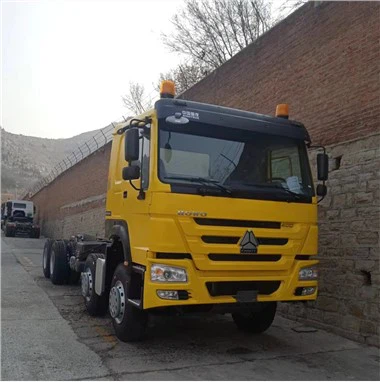 HOWO 6*4 TractorModel: ZZ4257S3241W. Emission Standard: EURO II, EURO III, EURO IV, EURO V. Driving Type: 6x4 / 10Add to Inquiry
 -
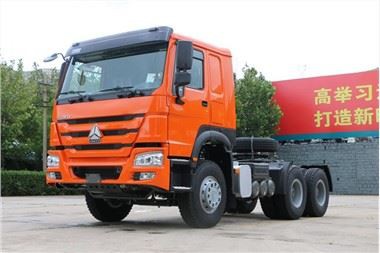
 HOWO 400HP Tractor TruckHOWO 400HP Tractor Truck is the latest traction truck developed by China Sinotruk Group. HOWO 400HPAdd to Inquiry
 -
-
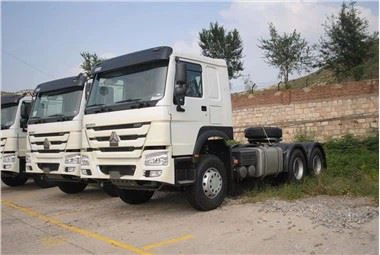 Prime MoverSinotruk HOWO 371hp 6X4 TRACTOR TRUCK / Prime Mover for Sale Product Description: The Howo modelAdd to Inquiry
 -
 HOWO Trailer HeadSinotruck 10 Wheel Tractor Truck for Sale The first version of the highway transport is equippedAdd to Inquiry
 -
-

-
 HOHAN 6×4 tractor truckHOHAN 6×4 TRACTOR TRUCK Model:ZZ4255V3246B1 Cabin:H77L cabin with one sleeper and A/C Engine:WP12.Add to Inquiry
 -
 Trailer Trucktrailer truck HOWO TRACTOR TRUCK- ZZ4257N3247C1 RFQ 1. You are a manufacturer or trading company?Add to Inquiry
 -
 HOWO Tractor TruckBrand: SINOTRUK HOWO. Model: ZZ4257S3241V. Emission Standard: EURO II, EURO III, EURO IV, EURO V.Add to Inquiry


- Tel: +8616678784677
- Email: export@sinotruks.net.cn
- Add: No.17670, Panwang Road, Zhangqiu District, Jinan City, Shandong Province, China.
Why Choose Us?
SINOTRUK technology development center, among China's first group of national corporate technical center, has a testing laboratory, which is accredited by Chinese National Accreditation Board, is qualified to develop and test vehicle, engine, parts material processes, owns sophisticated processing and testing equipment, and has been up to advanced world standards in terms of equipment such as engine, vehicle, parts vibration and strength test equipment.
2009, upon approval by the State, the National Heavy-duty Truck Engineering Research Center was inaugurated in SINOTRUK, which undertakes functions such as technical R & D, application demonstration, achievement popularization and technical service in China's heavy-duty truck industry. In 2009, with approval by the state, the National Heavy Duty Automobile Engineering Research Center was inaugurated in SINOTRUK, it undertakes functions such as technology R&D, application demonstration, achievement generalization, technical service of China Heavy Duty Truck industry.
We primarily organize the development, manufacturing and sale of trucks, special trucks, buses, special vehicles, engines and engine units, auto parts and special chassis. We have vehicle enterprises, engine enterprises, axle enterprise, as well as transmission enterprises.
With overwhelming superiorities in technology and market in heavy duty truck industry, SINOTRUK has achieved remarkable sales both domestic and abroad, our products have been exported to more than 90 countries world wide, thus being accredited as a national vehicle export base by the National Development and Reform Commission and the Ministry of Commerce.
Why Choose a Tractor Truck?
A common need in the shipping and logistics industry is to move trailers and cargo containers around the yard, terminal, or port. Many companies still rely on conventional road trucks to do so, but there is a better solution available. Terminal tractors, also known as shunt trucks, yard trucks, or spotter trucks, are an ideal solution for moving cargo containers and trailers around a storage facility.

Move More Cargo Per Shift
Time is money, especially in an industry that revolves around delivering goods as quickly as possible. A terminal tractor can move 3-4x more cargo per shift when compared to a conventional road truck, as they have specialized functions that save time.

Better Maneuverability
The conditions in a shipping facility or port are often cramped, tightly packed, and hectic. None of these words are things a commercial truck driver wants to hear! Terminal tractors, however, are better suited for such an operating environment, as they have a shorter wheelbase and solid-mounted rear axle, giving them a tighter turn radius. All this means that they can easily navigate around obstacles that a road truck would struggle with.

Easier to Operate
Terminal tractors are considered powered industrial trucks, and therefore do not require a commercial driver' s license. This means that it is easier to train and certify new employees to operate one, allowing you to maintain your operational tempo even in the face of employee turnover.

Even the most organized shipping facility or terminal can be a cramped, chaotic workspace. In short, they’re everything commercial truck drivers don’t want to hear. A terminal tractor, however, is designed for such an environment. With a shorter wheelbase and a solid-mounted rear axle, terminal tractors boast tighter turning radiuses than road trucks, allowing them to squeeze through more difficult spots and navigate the cramped confines of a terminal.
A Tractor Truck is a combination of a power unit (engine and transmission) and a cab, which is used together with a semitrailer. When they are combined, they are referred to as a tractor/trailer unit, commonly known as a 'semi'. The trailer is a separate piece of equipment that attaches to the back of the tractor using a 'fifth-wheel' attachment.
On the other hand, a straight truck is a type of truck that carries cargo on the same chassis as the power unit and cab, making it a single piece of equipment. For example, refuse trucks that collect residential waste or box trucks used for residential delivery are considered straight trucks.


In order to drive a tractor truck, you must have a CDL. The weight of the total setup determines what type of CDL you’ll need; Class C, Class B, or Class A. Class C CDL allows you to drive vehicles that are carrying more than 16 passengers, hazmat materials, and trailers. Class B CDL is for vehicles with a gross weight of 26,000 pounds or less, generally including box trucks, buses, and straight trucks. Class C CDL allows you to operate vehicles that have larger than 26,001 gross weight, typically including tractor trucks, flatbeds, and large livestock trailers. Tractor trucks are crucial for today’s economy and transportation industry.
Greater Driver Safety and Comfort
The same design features that make terminal tractors quicker to operate also help reduce the chance of injury. Not having to constantly enter and exit the cab to change trailers means there are fewer chances for the driver to slip and fall. Additionally, the hydraulic fifth wheel that lifts the trailer means there’s no need to crank the landing dolly and risk a repetitive stress injury.
Terminal tractors also feature wider windshields and a better perspective for the driver than road trucks, giving them superior visibility of their surroundings. This, in turn, means less chance of a collision, protecting both the driver and the terminal tractor.
Features like anti-skid surfaces on all standing work surfaces and 3-point access support on all climbing points make them some of the safest commercial vehicles to operate.
In an industry where worker safety is a constant concern, every one of these small design choices can be the difference between a happy, healthy worker and a workplace injury.
Transporting oversized, heavy loads is a challenging aspect of freight shipping. Heavy haul trucking has specific trucks capable of tackling overweight loads. Understanding what a straight truck is compared to what a tractor truck is, and their freight shipping capabilities is useful when choosing a straight truck vs. a tractor trailer to haul a supersized load.
We've created a guide to explain what a straight truck is compared to a tractor truck to help you decide the best way to transport a heavy load.
What Is a Straight Truck?
A straight truck, often referred to as a box truck, is a commercial vehicle that combines the cab and cargo box into a single unit, all mounted on a rigid frame.
Built on a single frame. A distinction of a straight truck is that it has a single frame from the front to the rear.
Attached to the same frame. Included in the straight truck definition are the axles and cargo containers that are attached to the same frame.
Useful sliding rear door. These trucks are equipped with a sliding rear door, allowing for easy loading and unloading of cargo boxes. Their compact size and maneuverability make them well-suited for navigating urban areas and tight spaces.
Whether it's transporting packages, household items, or other goods, Box Cargo Truck offer a versatile solution for efficiently moving cargo from one location to another.
What Is a Tractor Truck?
Certain features distinguish what a tractor truck is when comparing a straight truck vs. a tractor trailer.
Built for heavy loads. The difference between a tractor truck and a straight truck is that a tractor-trailer is a powerful semi-trailer capable of carrying heavier cargo loads than a straight truck is capable of.
Designed to pull a semi-trailer. In trucking lingo, the definition of a tractor truck is a type of semi truck specifically designed to pull trailers because semi-trailers do not have front axles and cannot move on their own.
Used for flatbed freight. One quality of what is a tractor truck is it is great for pulling a flatbed trailer and for long-haul flatbed shipping services.
Different from other types of trucks. When comparing a straight truck vs. a truck tractor, a regular tractor truck has a fifth wheel mounted over the rear axle to pull a trailer.
More powerful. When discussing what a tractor truck is, it's important to note that it is a heavy-duty vehicle that is more powerful than an average straight truck.
When deciding which is better for a heavy haul load, comparing a straight truck vs. a tractor-trailer is useful.
Straight Truck vs. Tractor Trailer: Key Differences
There are key differences between what's a straight truck and what is a tractor truck in terms of operational costs, versatility, workload, CDL requirements, and capacity.
|
Operational Costs |
Lower operational costs due to fuel efficiency, maintenance, insurance, and driver salaries |
Higher operational costs due to fuel efficiency, maintenance, insurance, and driver salaries |
|
Versatility |
More versatile due to its ability to navigate tight spaces and access a variety of job sites |
Less versatile due to its larger size and limited ability to navigate tight spaces |
|
Work Load |
Suitable for short-haul deliveries and deliveries to urban areas |
Suitable for long-haul deliveries and deliveries to large job sites |
|
Loading Capacity |
Lower loading capacity due to its smaller size |
Higher loading capacity due to its larger size |
|
Licensing and Regulations |
Requires a Class A CDL to operate |
Tractor trailers necessitate more advanced licensing due to their larger size and complexity, and they are subject to varying regulations |
●1. Operational Costs of Trucks
When discussing what a straight truck costs to operate compared to what a tractor truck costs to operate, there are some key differences.
Regarding the fuel efficiency of a straight truck vs. a tractor trailer, a straight truck is more economical with fuel usage. A straight truck means lower maintenance costs.
Tractor trucks have higher maintenance and repair costs because their engines are larger and require more upkeep.
●2. Versatility of the Vehicles
Consider the usefulness of each vehicle to choose the right one for your situation. A straight truck vs. a tractor truck has different uses.
Straight trucks offer superior maneuverability, making them ideal for navigating tight spaces like urban areas or narrow streets. They're more agile and can access locations that might be challenging for larger vehicles.
Tractor trailers, although less maneuverable in tight spaces, excel in reaching various job sites and delivery locations. Their long-haul capabilities make them suitable for transporting goods over all distances.
●3. Workload of the Trucks
Another important consideration is the workload of a straight truck vs. a truck trailer.
Straight trucks, being smaller and more compact, are typically suited for lighter loads. Their single-frame design restricts the cargo size, making them ideal for quick, short-distance hauls or deliveries where larger vehicles might struggle.
Tractor trailers are designed for heavier and bulkier loads, thanks to their powerful engine and detached trailer design. They are the go-to choice for long-haul transport, capable of carrying substantial freight over vast distances.
●4. Loading Capacity Differences
Another consideration is each vehicle's capacity for carrying loads, as reflected in its Gross Vehicle Weight Rating (GVWR).
Straight trucks typically have a lower GVWR compared to tractor-trailers. 33,000 pounds is the maximum GVWR of a straight truck making them suitable for smaller loads and shorter distances.
In contrast, tractor-trailers have a higher capacity, around 80,000 GVWR, allowing them to transport substantially larger and heavier loads over long hauls.
●5. Licensing and Regulations
A notable straight truck vs. tractor trailer difference lies in the licensing requirements and regulatory obligations imposed on their operation.
A straight truck driver typically needs a commercial driver's license (CDL) with appropriate endorsements, depending on the weight and size of the vehicle.
Tractor trailers often require a higher level of licensing due to their size and complexity. Additionally, regulations governing the operation of each type of vehicle, such as weight restrictions, hours of service, and safety standards, differ based on the specific category.
What Does Driving a Tractor-Trailer Entail?
Driving a tractor-trailer involves transporting cargo to customers on a timely basis. These truck drivers often assist with loading and unloading heavy goods, especially those that can't fit into straight trucks. For example, you may transport cars or forest products in the trailer of these combination units. Tractor-trailer drivers also maintain signed paperwork and submit the required documentation after completing a delivery route. They may also facilitate routine service on tractor-trailers, such as checking oil, water, gasoline, and air levels.
Companies typically use tractor-trailers to transport items to far destinations, so driving these combination trucks can be an exciting way to explore the country. There's typically more space to store cargo using these combination units, unlike straight trucks.
Here are the benefits of starting a trucking career:
Independence
Driving a truck typically involves transporting goods independently and supervising yourself. While your employers may provide directions on where and when to make deliveries, you often decide the remaining aspects of your transportation task. For example, you typically have the option to choose a route to make fast deliveries.
Flexible schedules
As a truck driver, you may create your schedules to achieve a better work-life balance. For example, you may choose to work on weekdays to spend the weekends with family and friends. Confirm this workplace flexibility before you choose a truck-driving job, and ensure you understand your potential employer's expectations.
Job security
Transporting cargo is essential in nearly every community because individuals and businesses often need deliveries at grocery stores, malls, and hospitals. Starting a trucking career offers the opportunity to make a positive impact by ensuring community members have the goods they need. It can also be a rewarding career, especially if you enjoy contributing to shared goals.
Career advancement opportunities
Working in transportation offers opportunities for career advancement. For example, you may pursue more training to teach truck driving at an accredited school. You may also advance into a management role after several years as a straight truck or tractor-trailer driver. If becoming an entrepreneur interests you, starting a trucking company may also be a career advancement plan to consider.
Training reimbursement
Becoming a certified truck driver involves completing a training course that typically lasts up to three months. Depending on the trucking company, you may also need an air brake endorsement and transportation of dangerous goods (TDG) certificate. When applying for a trucking job, potential employers may offer to reimburse your training and certification fees to attract you to their company.
Our Factory
SINOTRUK technology development center, among China's first group of national corporate technical center, has a testing laboratory, which is accredited by Chinese National Accreditation Board, is qualified to develop and test vehicle, engine, parts material processes, owns sophisticated processing and testing equipment, and has been up to advanced world standards in terms of equipment such as engine, vehicle, parts vibration and strength test equipment.


FAQ
Q: What is a tractor truck?
Q: Is it semi-truck or tractor?
Q: What is the tractor on a truck?
Q: What is the name of a tractor truck?
Q: Why are semis called tractors?
Q: Are trucks called tractors?
Q: Is a straight truck a tractor?
Q: What is a truck tractor for dot?
Q: Why is it called a tractor?
Q: Is a dump truck a tractor?
Q: Why is an 18 wheeler called a tractor-trailer?
Q: How many gears does a tractor have?
Q: Why are tractor trailers 53?
Q: How far can a semi go on a full tank?
Q: Why are most tractor trailers white?
Q: Why do semis have trailer tails?
Q: What MPG does a semi-truck get?
Q: Why do tractor trailers have skirts?
Q: Why do so many tractor trailers get pulled over?
Q: Why do semi trailers have magnets?
We're well-known as one of the leading tractor truck manufacturers and suppliers in China. Please feel free to wholesale high-grade tractor truck in stock here from our factory. All customized products are with high quality and competitive price. Contact us for more details.
old concrete mixer trucks, quint axle dump truck, special heavy truck